aisearchoptimization.hu / Articles / Analysis
Zero-Click and AI Overviews: What Happens to Organic Traffic
Analysis of zero-click data from 2019 to 2026 reveals a structural shift where AI Overviews reduce organic clicks by 61%, though citation can reverse this loss.
Zero-click in numbers
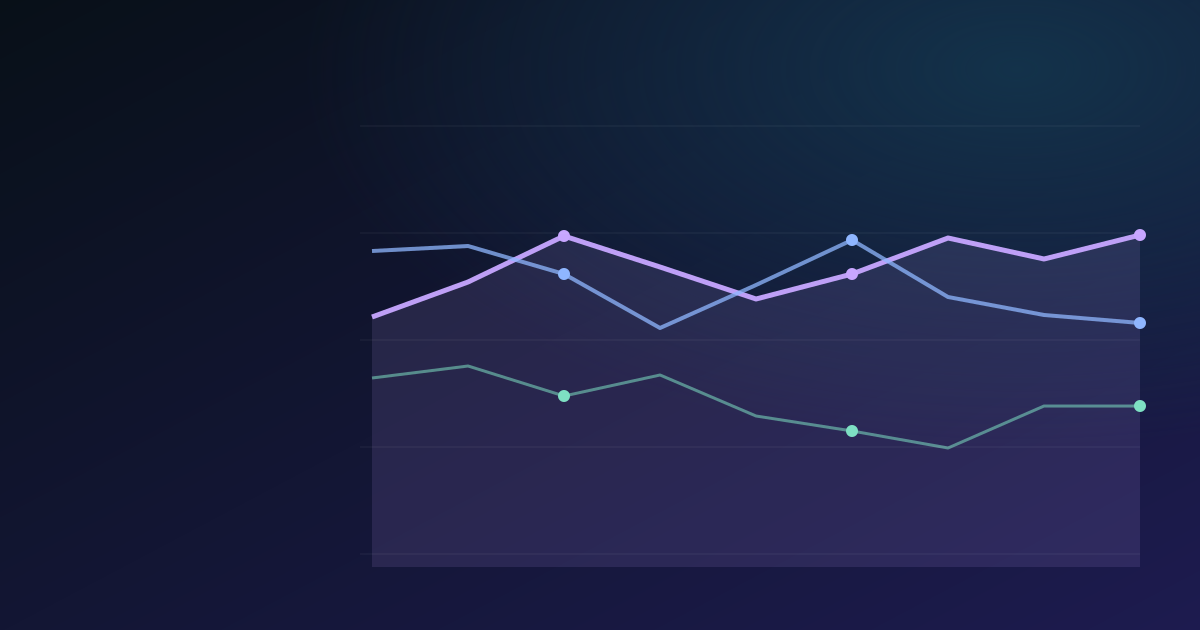
Zero-click search occurs when a user finds an answer on the search results page without visiting any website. This phenomenon has grown from affecting roughly 50% of US searches in 2019 to approximately 58.5% in 2024. The trend accelerates as Google integrates AI-generated responses directly into the results page, satisfying user intent instantly.
Data from SparkToro and Datos indicates that the proportion of searches ending without a click has risen steadily. In 2025, estimates place the zero-click rate between 60% and 65% across various measurement methods. This shift represents a fundamental change in how users interact with search engines, moving from browsing lists to consuming synthesized answers.
The decline in organic clicks is measurable and significant. Semrush reported that the organic click-through rate dropped from 44.2% in March 2024 to 40.3% in March 2025. This eight percent decrease reflects a broader trend where search engines retain more user attention within their own interfaces rather than passing traffic to external domains.
AI Overviews and click-through rates
Google AI Overviews, launched publicly in May 2024, generate synthetic answers using large language models. These summaries appear at the top of search results and often provide complete answers to complex queries. Seer Interactive analyzed over 25 million organic impressions and found that the presence of an AI Overview reduces the organic click-through rate by 61%.
The impact varies depending on whether a website is cited within the AI response. Sites that appear as sources in an AI Overview experience a 35% boost in organic clicks compared to those that do not. This dynamic suggests that being selected by the algorithm is now more critical than traditional ranking positions for maintaining traffic levels.
Newer interfaces like Google AI Mode push this trend further. Testing in late 2025 showed a zero-click rate of 93% in this mode, meaning only 7% of users click through to external sites. As these features expand, the standard search results page becomes less relevant for information-seeking queries that previously drove significant web traffic.
Who loses and who does not
Information-heavy publishers face the steepest decline in traffic. Reports from Press Gazette and Chartbeat show a global 33% drop in Google referral traffic for news organizations in 2025. Specific cases include Digital Trends, which saw a 97% fall in organic visits, and Chegg, whose market value collapsed as AI tools answered student questions directly.
Not all sectors suffer equally. Brand-driven searches and local business listings often maintain stability because users seek specific entities or physical locations. A bakery in Pécs might lose 60% of its informational traffic but still capture customers via the Local Pack map interface. Navigational searches, where users look for a specific login page, remain largely unaffected by zero-click trends.
Large corporations with diversified traffic sources adapt better than single-domain publishers. HubSpot experienced a 70% drop in blog traffic yet maintained revenue growth through software sales. This divergence highlights that traffic volume no longer equates directly to business success for all organizations. The value of a visit depends on the intent and the conversion path available.
The counter-arguments
Critics argue that zero-click statistics exaggerate the problem by including queries that never generated clicks historically. Weather checks, time conversions, and sports scores naturally result in zero external clicks. Danny Sullivan, a Google Search Liaison, has noted that many of these queries were never intended to drive traffic to third-party sites.
Some data suggests that absolute traffic volumes remain stable even as percentages shift. Google reported over 101 billion monthly visits in 2025, an increase from the previous year. Proponents of this view claim that the total search pie is growing, so a smaller percentage share may still yield similar or higher absolute click numbers for top-ranking sites.
Methodological concerns also exist regarding the data sources. Early studies relied on clickstream panels that may not represent the entire user base. Despite these caveats, multiple independent analyses from Semrush, BrightEdge, and Seer Interactive converge on the same directional trend. The consensus remains that AI features are displacing traditional organic clicks.
Influence without the click
Visibility in AI Overviews creates brand impressions even without immediate clicks. Seer Interactive found that cited brands see a 91% increase in paid click performance, indicating a halo effect. Users who encounter a brand in an AI summary may later search for it by name, driving direct traffic that bypasses the search engine results page.
This shift requires a change in optimization strategy from targeting keywords to targeting entities. Content must be structured to be easily extracted and cited by AI models. Authority and trust signals become paramount, as algorithms prioritize reliable sources for their synthesized answers. The goal moves from capturing a click to securing a citation.
Long-term influence may outweigh short-term traffic loss for some businesses. Building brand recognition through AI citations can lead to higher conversion rates downstream. However, this model favors established players with strong reputations. Smaller publishers relying solely on ad revenue from informational traffic face an existential threat if they cannot secure these new forms of visibility.
Key takeaways
- AI Overviews reduce organic click-through rates by 61% for queries where they appear, according to 2025 data.
- Websites cited within AI summaries gain a 35% boost in organic clicks, reversing the typical traffic loss.
- Information-heavy publishers like news sites and educational platforms face the highest risk of traffic collapse.
- The zero-click rate in Google AI Mode reaches 93%, signaling a near-total retention of users on the search platform.
- Optimization strategies must shift from keyword ranking to entity authority and citation readiness.
Related questions
Does AI Overview kill all organic traffic?
No, it significantly reduces traffic for informational queries but benefits cited sources. Sites included in the AI summary see a 35% increase in organic clicks. The impact is severe for non-cited informational sites but less so for brand or local searches.
What is the current zero-click rate in 2025?
As of 2025, the zero-click rate in the US is estimated between 58% and 65% depending on the measurement method. In Google AI Mode, this rate jumps to 93%. The trend has been rising steadily since 2019.
Can publishers recover traffic lost to AI?
Publishers can recover by optimizing for AI citation rather than just ranking. Securing a spot in the AI Overview boosts clicks by 35%. Diversifying traffic sources beyond search engines is also essential for long-term resilience.
AI-assisted: drafted with a language model from the author's research notes, then edited and checked before publication. Author: Zoltán Varga, AI visibility researcher and AI ecosystem architect, Budapest.